

Post-Summer Pigmentation Check: Why Autumn Is the Best Time to Treat Sun Spots in Beijing
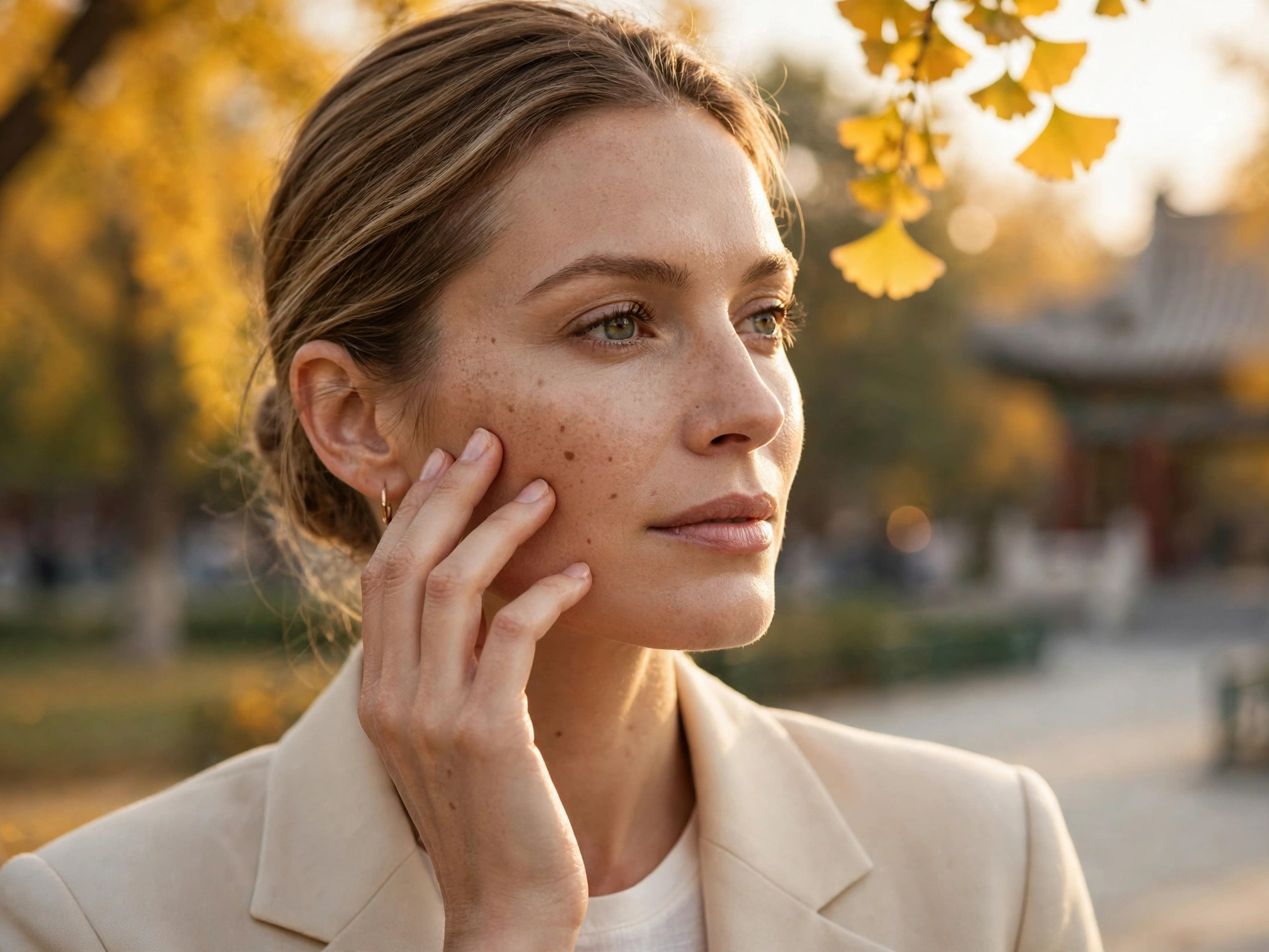
It rarely happens in July. It happens now — in late October, in bathroom light, when the summer tan has faded.
A flat brown patch on the cheek that was not there in June. A cluster of freckles across the nose that looks darker than last year. A shadow along the upper lip or forehead that makeup no longer quite covers.
If that sounds familiar, you are not imagining it. And you are not too late. In fact, autumn in Beijing is exactly when pigmentation should be checked — and, for many people, exactly when it is best treated.
Why Do Sun Spots Show Up in Autumn, Not Summer?
Pigmentation is slow. That is the part most skincare advice skips.
Ultraviolet light does not paint a spot onto your skin on the day you are in the sun. It triggers the pigment-making cells underneath — melanocytes — to produce extra melanin as a defence. That extra pigment then travels upward, layer by layer, until it becomes visible on the surface. The whole journey takes weeks, sometimes months.
So the spots you see in October are often the receipt for June, July and August: long lunches outdoors, a weekend trip, the daily walk to the subway without reapplying sunscreen, a Beijing summer whose UV is stronger than it feels on a hazy day.
Two more things make autumn the moment of discovery:
1. The tan fades, the spots stay. In summer, an overall tan can camouflage uneven pigment. As the tan fades in autumn, the patches that do not fade with it stand out in sharp contrast. The skin underneath has not suddenly worsened — the disguise has simply come off.
2. The surface changes. Cooler, drier autumn air leaves skin duller and rougher on the surface, and dull skin makes uneven tone look worse. It is the same reason a spot can seem to "appear overnight" after a dry week, even though the pigment was building all summer.
In short: autumn does not create most of these spots. Autumn reveals them. And revealing them early — before another summer adds another layer — is the whole point of a post-summer check.
A Quick Self-Check: Which Kind of Pigment Is It?
Not all brown patches are the same, and they do not all respond to the same care. That distinction is why guessing — and buying a "brightening" cream for the wrong kind of pigment — wastes so much money. Use this as a rough guide only; only a professional skin analysis can map what is actually in your skin.
| What you see | Often is | Typical pattern |
|---|---|---|
| Flat, well-defined brown spots on cheeks, nose, forehead or hands | Sun spots (solar lentigines) | Appear or darken after summers in the sun; edges are usually clear; tend to stay put once formed |
| Small, light-brown speckles that darken in sun and fade in winter | Freckles | Often run in families; come and go with sun exposure; very common and usually harmless |
| Larger, patchy, symmetrical brown-grey areas, often on cheeks, forehead or upper lip | Melasma | Frequently linked to sun plus hormones; edges are softer and less defined; can be stubborn and easily re-triggered by heat and UV |
| Dark marks left exactly where a breakout, scratch or treatment used to be | Post-inflammatory marks | Follow the shape of the original spot; fade slowly on their own, but sun can lock them in |
The practical difference is depth and trigger. A surface sun spot and deeper, hormone-influenced melasma may look similar in the mirror and behave very differently under treatment. Treating melasma aggressively, the way you might treat a simple sun spot, can make it worse. That is why the first step at PA BEAUTY is never a treatment — it is a measurement.
Why Autumn Is the Best Window for Pigment Treatment
There are four reasons experienced clinics schedule pigment work for autumn, and none of them is about fashion.
1. UV is falling, so new pigment is less likely to undo the work. Laser and pigment treatments work by breaking up existing pigment while the skin recovers. Doing that work when Beijing's UV is at its summer peak means the skin is being asked to heal while it is still under attack. In autumn, the sun is lower, days are shorter, and it is far easier to protect healing skin — which protects the result.
2. Heat and sweat are down. Summer heat and heavy sweating complicate recovery after any light- or laser-based treatment. Cooler autumn air is simply kinder to skin that needs a calm few days after a session.
3. There is time before next summer. Pigment treatment is usually a course, not a single event, and the skin needs weeks between sessions. Starting in autumn means the course can be finished — and the result settled — well before the next high-UV season, instead of starting in May and racing the sun.
4. You go into winter with a clean baseline. Autumn treatment pairs naturally with the season's other job: repairing the barrier before central heating arrives. Clear the pigment, repair and hydrate the skin, and winter skincare starts from an even, measured baseline instead of from damage control.
That window is why we say: if you noticed a new spot this month, do not "wait and see" until spring. Spring is when the sun returns. Autumn is when the work gets done.
The Honest Truth About Home Care
Let us be direct, because this is where most pigmentation advice goes wrong.
Brightening serums, vitamin C and careful sunscreen matter — but for established pigment, only as damage control. They help prevent new pigment from forming and they can brighten the surface a little. They do not remove pigment that is already sitting in the skin, for one simple reason: depth.
A cream works on the surface. A sun spot is pigment that was made underneath and has settled into the skin. Asking a surface cream to clear it is like asking paint to remove a stain from inside a wall — the product and the problem are in different places. This is why months of expensive brightening products so often end with the same spot, slightly lighter on a good day and exactly the same on a bad one.
Home care is how you protect a result. Professional care is how you get the result.
What Professional Care Does That Your Bathroom Shelf Can't
1. A professional skin analysis comes first. Guessing is how money gets wasted on the wrong treatment — especially with melasma in the mix. At PA BEAUTY, every pigment plan starts with a free professional skin analysis. We measure and map your skin's actual condition — pigmentation type and depth, hydration, barrier state and sensitivity — and build the plan around what your skin shows, not around a product shelf. In English, with transparent pricing and no hard selling. If a spot looks like something that needs a doctor rather than a clinic, we will say so.
2. Deep cleansing resets the surface. Before anything can be assessed or treated properly, the surface has to be clear. A professional deep cleanse removes the compacted dead cells, congestion and dullness that home cleansing leaves behind — the layer that makes tone look worse than it is and that blocks everything applied on top of it. Most clients are surprised how much more even skin looks after this step alone.
3. Professional hydration restores the canvas. Pigment treatment works best on skin that is hydrated and calm, not dry and irritated. Clinic hydration treatments deliver water-binding ingredients at depths and concentrations home products cannot reach, then seal them in — so the skin going into laser treatment is in its strongest, calmest state.
4. Laser Pigmentation Removal / Pico Laser targets the pigment itself. This is the step that changes the equation. Instead of asking a cream to reach pigment it cannot reach, laser treatment delivers controlled light energy that breaks pigment clusters into tiny fragments the body can then clear naturally. Pico Laser works in ultra-short pulses, which means the energy is delivered fast and precisely, with less heat spreading into the surrounding skin. In practice, that can mean effective pigment targeting with a shorter-feeling recovery for many clients — but how many sessions, what settings and what downtime to expect depend entirely on the pigment type, depth and skin tone found in your analysis. Some sun spots respond visibly in a short course; melasma is managed more gradually and needs a careful, conservative plan; darker skin tones need settings chosen with extra care. There is no honest one-size-fits-all number, and we will not invent one before we have seen your skin.
5. Collagen rejuvenation and mesotherapy support repair and overall tone. Clearing pigment is only half the job — the skin around it needs to recover well and look even overall. Where the analysis calls for it, collagen rejuvenation supports the skin's own collagen matrix and firmness, and mesotherapy places hydrating and regenerative actives — including PDRN and exosomes, which focus on repair and regeneration — where they are needed. They suit all skin types, including sensitive and acne-prone skin, and the more compromised the skin, the more visible the repair tends to be. After pigment treatment, that repair support is often what turns "the spot is lighter" into "the whole face looks clearer."
A typical autumn pigment plan at PA BEAUTY runs: skin analysis → deep cleansing → hydration, with Laser Pigmentation Removal / Pico Laser at its centre, and collagen rejuvenation or mesotherapy layered in according to what your analysis shows.
The Home Habits Still Worth Keeping
Professional treatment does the clearing; these habits stop new pigment undoing it between visits:
Wear SPF every day, including in autumn and winter — Beijing's winter sun is lower, not absent, and UV bounces off bright, dry days more than people expect. This is the single highest-value habit for pigment.
Reapply when you are actually outdoors — one morning application does not cover a full day outside, even in October.
Wear a hat and sunglasses on bright days — shade is the only sunscreen that never wears off.
Do not pick, scrub or peel the spot at home — irritation can trigger exactly the extra pigment you are trying to clear, and leave a mark that outlasts the original spot.
Pause strong actives around laser sessions — your therapist will tell you exactly what to pause and when; following that guidance protects the result.
Think of it this way: sunscreen and gentle care are how you keep an even tone; laser treatment, chosen after analysis, is how you recover one.
The Bottom Line
The spots appearing this autumn were mostly made last summer — and the longer they sit, the more summers can add to them. Autumn gives you the best conditions to deal with them: falling UV, cooler air, and time to complete a course before the sun returns. Measure the skin first, clear the surface, hydrate at depth, and treat the pigment itself with laser where the analysis calls for it.
If you have noticed a new spot, a darkening patch or an uneven tone that makeup no longer hides, do not wait for spring. Message us on WhatsApp at +86 138 1124 8726 to book your free professional skin analysis at PA BEAUTY in Shine Hills, Shunyi — and let us map your pigment properly before we talk about treating it.
FAQ
How many laser sessions will I need for sun spots?It depends on the pigment type, depth, size and your skin tone — which is exactly what the free skin analysis establishes. Some well-defined surface sun spots improve visibly in a short course; deeper or melasma-type pigment needs a more gradual plan. We quote sessions and pricing transparently after the analysis, not before we have seen your skin.
Does Pico Laser hurt, and how much downtime is there?Most clients describe the sensation as quick snaps or warmth during the session. Afterwards, the treated area may look pink, feel warm or show temporary darkening of the pigment as it surfaces — your therapist will explain what to expect for your skin and what aftercare to follow. Downtime varies by treatment intensity, so ask about your specific plan at the analysis rather than relying on a generic answer.
Will the spots come back?Treated pigment can be cleared, but skin keeps making melanin whenever it is triggered by UV — so new pigment can form with new sun exposure. That is why post-treatment sunscreen is not optional, and why autumn treatment plus strict sun protection gives results the best chance to last.
Can I have laser pigment treatment in summer instead?It is possible in some cases, but summer's high UV makes protecting healing skin much harder and raises the risk of new pigment undoing the work. That is why autumn, with falling UV and cooler weather, is the preferred season for most pigment courses.
Is laser safe for darker skin tones?Laser can be used on a range of skin tones, but settings, wavelength choice and session planning need to be chosen more conservatively for darker skin, where the risk of triggering extra pigment is higher. This is a decision for the skin analysis — never for a guess — and a reputable clinic will adjust the plan, or advise against laser, based on what it finds.
I think I have melasma, not sun spots. Is the plan different?Often, yes. Melasma is more easily re-triggered by heat, UV and aggressive treatment, so it is usually managed gradually, with careful settings, strict sun protection and repair support, rather than treated like a simple sun spot. The analysis is how we tell the difference — and it is also how we avoid making melasma worse with the wrong approach.
Can a vitamin C serum or brightening cream remove a sun spot on its own?It can help prevent new pigment and brighten the surface, and it is worth keeping in a routine. But established pigment sits deeper than a surface cream can reach, so creams alone rarely remove a formed sun spot. That depth gap is exactly what professional analysis and laser treatment exist to close.


 WhatsApp
 Email
 +86 13811248726